Enjoy 10% off on herbal remedies! Sign up Now!
Yerba Mate
Yerba Mate Tea: Traditional Uses, Preparation & Social Rituals
12/30/20252 min read
Yerba Mate Tea: Traditional Uses, Preparation & Social Rituals
Introduction
Yerba mate has been traditionally used in cultural and social practices across South America for centuries, valued for its earthy flavor, communal preparation, and role in shared ritual. Commonly prepared as a tea-like infusion, yerba mate has long been incorporated into daily routines centered around connection, conversation, and presence.
Within traditional contexts, yerba mate is appreciated not as a solitary or ceremonial herb, but as a social botanical—often prepared and shared among friends, families, and communities as a symbol of hospitality and togetherness.
What Is Yerba Mate?
Yerba mate (Ilex paraguariensis) is an evergreen tree native to regions of Argentina, Paraguay, Uruguay, and southern Brazil. In traditional preparations, the leaves and small stems are harvested, dried, and cut before use.
Yerba mate has been used for generations by Indigenous peoples of South America and later adopted into widespread cultural practice. Its preparation and sharing rituals are as significant as the beverage itself.
Traditional & Cultural Uses of Yerba Mate
Yerba mate holds a central place in South American traditions:
Indigenous Guaraní culture used yerba mate in daily and ceremonial contexts.
Social traditions revolve around sharing mate from a communal vessel.
Cultural hospitality practices treat mate as a gesture of welcome and respect.
Daily routines incorporate mate as a steady companion during work, travel, and conversation.
Across cultures, yerba mate was traditionally used to foster connection and continuity, emphasizing ritual over urgency.
How Yerba Mate Is Traditionally Prepared
Yerba mate is prepared in a unique way that distinguishes it from most herbal teas.
Traditional Yerba Mate Preparation
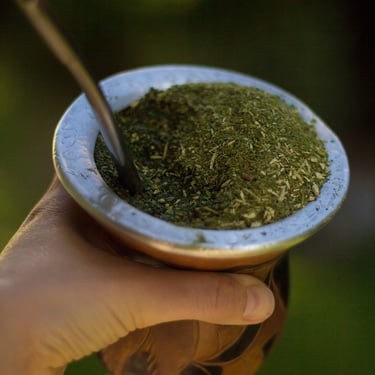
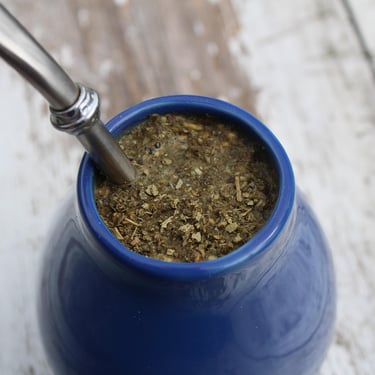
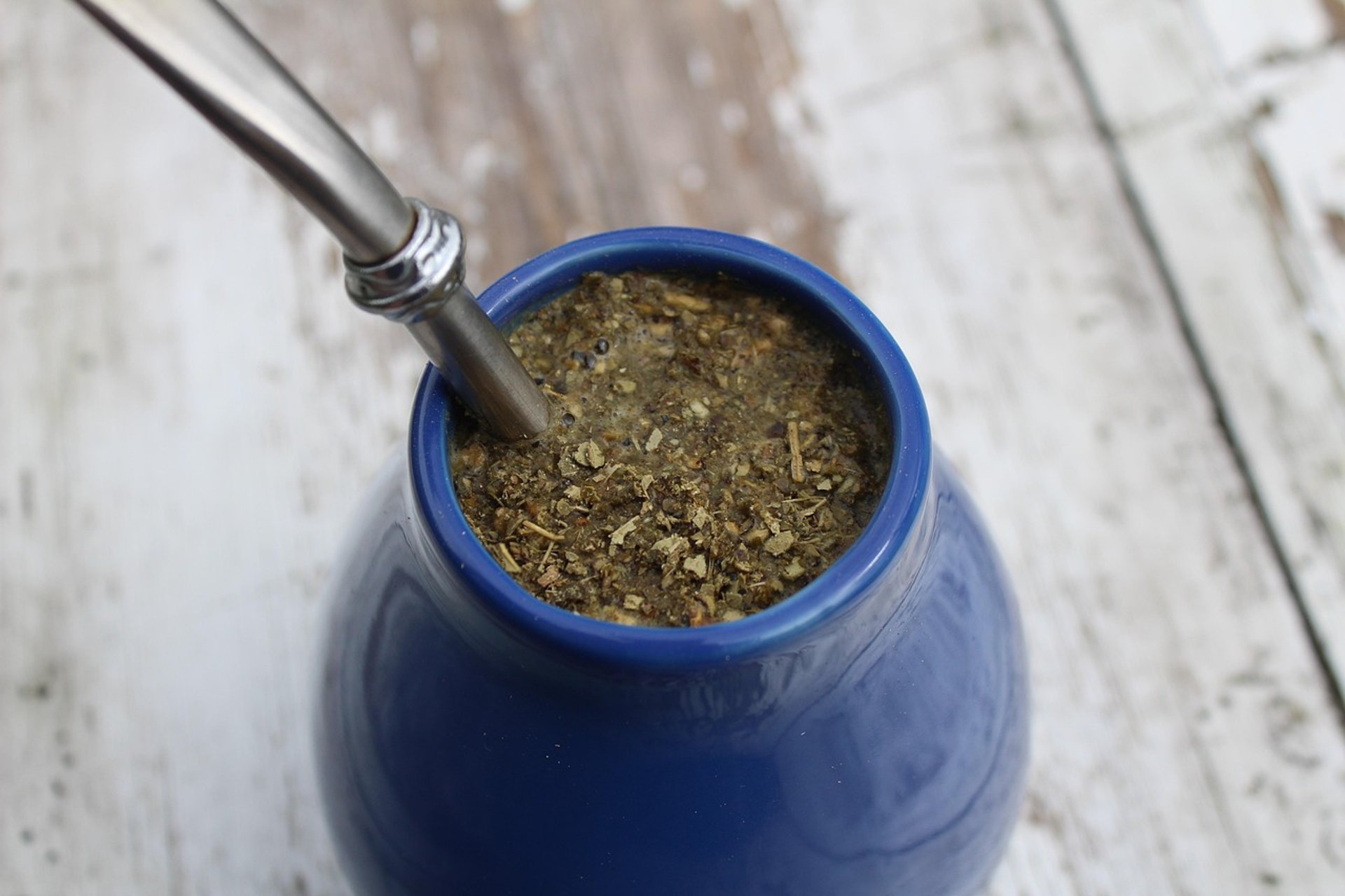
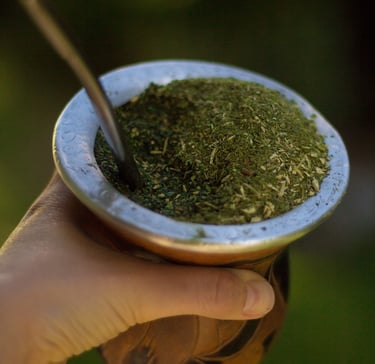
Yerba mate is typically prepared in a hollowed gourd (mate) and sipped through a metal straw (bombilla).
Traditional preparation method:
Fill the gourd partially with dried yerba mate
Add warm (not boiling) water
Sip through the bombilla
Refill with water multiple times
The same leaves are often infused repeatedly during a single session.
Modern Tea Preparation
Yerba mate can also be prepared like a loose-leaf tea for convenience.
Taste & Sensory Profile
Yerba mate has a bold, earthy, and slightly bitter flavor.
Sensory characteristics include:
Green, grassy aroma
Bitterness similar to strong tea
Clean, lingering finish
Its distinctive taste is closely tied to its traditional preparation and social use.
Ritual & Energetic Associations
Traditionally, yerba mate has been associated with:
Community and connection
Shared ritual
Presence and continuity
Hospitality and trust
In ritual contexts, yerba mate symbolizes togetherness through repetition. The act of passing the gourd reinforces patience, attention, and mutual respect.
Yerba Mate in Herbal Traditions Today
Today, yerba mate continues to be enjoyed both traditionally and in modern adaptations. Its enduring popularity reflects a cultural appreciation for rituals that blend nourishment with connection and daily rhythm.
Yerba mate reminds us that herbal practices are not always private—they can be communal, relational, and woven into everyday life.
Related Herbal Guides
If you’re exploring yerba mate, you may also enjoy learning about:
Cacao – ceremonial and communal traditions
Damiana – social and sensory rituals
Peppermint – refreshing and balancing blends
(Part of the Flora Amora Herbal Knowledge Library.)
Yerba Mate & Flora Amora
Yerba mate is featured in select Flora Amora herbal blends, thoughtfully paired with complementary botanicals to honor traditional preparation methods and social rituals.
Educational Disclaimer
This content is for educational purposes only and reflects traditional and cultural practices. It is not intended to diagnose, treat, or cure any condition.